

"Sapporo Snow Festival" 8K Live Streaming experiment
succeeded focusing on the video distribution network security
<28 January to 1 March 2019>
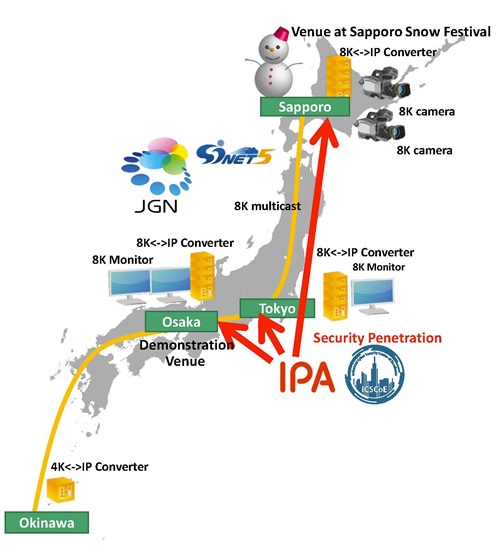
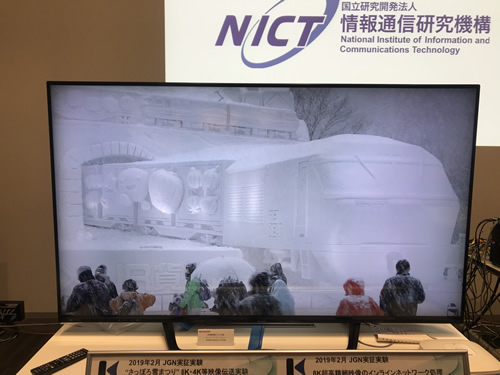
In February 2019, NICT Testbed Research and Development Promotion Center has conducted, on "JGN" testbed, the video streaming demonstration experiments with 8K video showing the images of Sapporo Snow Festival and professional baseball camp. More than 150 researchers and engineers from 51 organizations including NICT took part in the experiments and showed their cutting-edge expertise. The participants' expertise, such as technology, human resources and equipment, has led the experiments to the success.
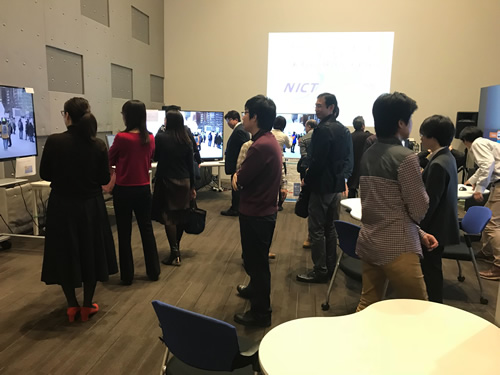
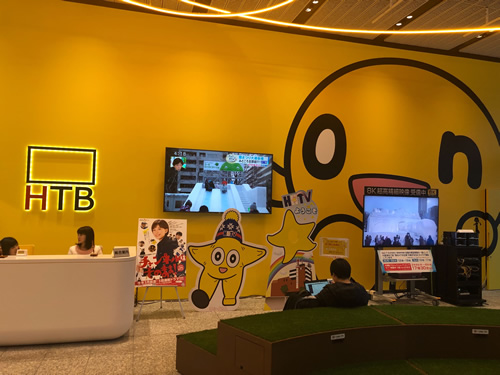
On February 7th, the public viewing of 8K video demonstration were held at Grand Front Osaka building in Osaka, and at Hokkaido Television Broadcasting Corporation (HTB) building in Sapporo.
Overview
In the video streaming demonstration experiment, we have built realistic experimental sites as close as the actual production environment from scratch on JGN testbed and have been conducting various advanced experiments related to networks and video distribution since 2004.
This year, we have conducted security penetration tests and experiments which are called video replacement experiments under the theme of video distribution network security. In addition, we were looking toward the next generation network distribution and conducted 400Gbps interconnection experiment between switches provided by different vendors, and distribution trials in a mixed software communications environment. Large-scale emulation testbed "StarBED", which is one of the services NICT provides, is used for recording of uncompressed 8K video images.
• Security penetration test on video distribution networks
As deep concerns have been expressed for protection against cyber-attacks on industrial infrastructure, security risk analysis and countermeasures have become increasingly important for the video distribution networks between stations and relay stations.
At this experiment, under the initiative of the Information Technology Promotion Agency (IPA) Industrial Cyber Security Center of Excellence, members of the Industrial Cyber Security Advanced Human Resource Development Program have conducted various penetration tests, including tests against undisclosed vulnerabilities, and revealed the security problems of the video distribution networks. In addition to the 8K uncompressed experiment, we tested HD, 4K and 8K compression devices that are currently used for video distribution.
• 8K uncompressed video content replacement assuming a Man-In-The-Middle attack
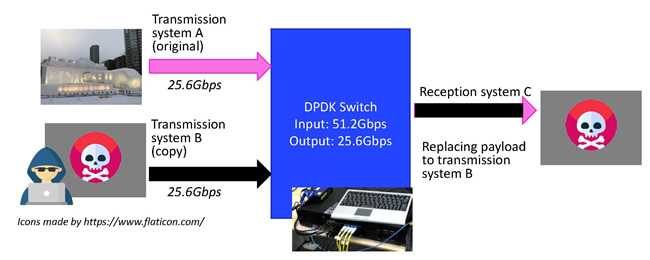
The Man-In-The-Middle / MITM attack involved intercepting and tampering with data exchanged via communications along the communication path. It has been thought so far that it may be difficult to attack on video distribution due to its large data volume and high real-time performance, and it is necessary to handle two input systems (25Gbps x 2).
At this experiment, with a team of Kanagawa Institute of Technology, we successfully demonstrated to replace 8K live uncompressed video stream (about 25 Gbps).
Using the DPDK-based software switch built on a Linux server, transmission system A inputs the original distribution video (live video stream from Sapporo), and transmission system B inputs a fake video (pre-recorded 8K video stream).
The video data "replacement" is done by replacing the data packet payload of transmission system A with the data transmission system B on the DPDK switch and output it to reception system C. From this result, it was clear that it is necessary to take security measures for the high quality, high-volume video distribution
• Kamuee: High-speed software routing engine
The development team of Kamuee, a high-speed software routing engine that runs on a PC basis developed by NTT Communications, participated to build an experimental network consisting of hardware-based devices and software-based devices to carried out the trial of the video distribution.
• Interoperability of 400Gbps Ethernet switches
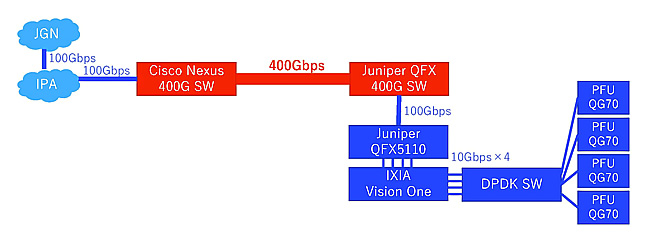
For the 400Gbps Ethernet standard, which is expected to expand in the backbone network of communication infrastructure, interoperability tests were conducted between 400Gbps switches provided by different vendors. With this experiment, we have succeeded a series of 8K video distribution experiments, such as contents replacement by connecting 400Gbps switches from Cisco Systems and Juniper Networks (both organizations have participated in the experiment). This is the world's first inter-vendor interoperability tests for 400Gbps switches succeeded.
About the experiments
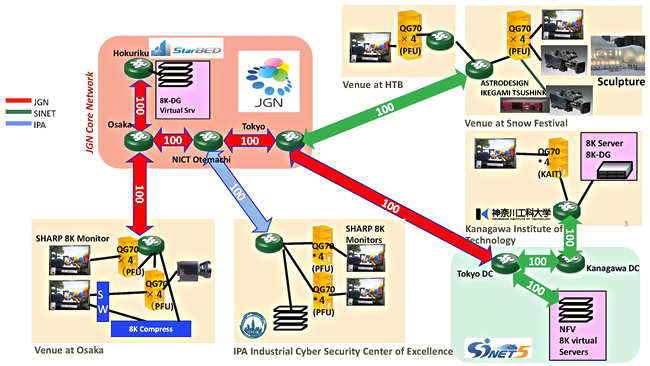
Under the auspices of NICT, companies, universities and research organizations have participated in this project, with a common goal of proving the latest technological challenges. On that basis, according to individual challenges of each participating organizations, they brought together equipment, products and software that are under development and deeply involved from the design stage of the experiments. This made possible to build an environment with the various devices the same as the actual network operation.
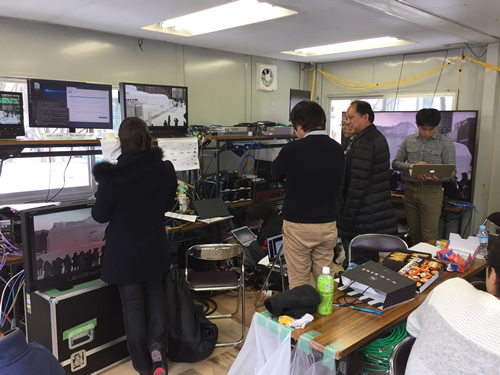
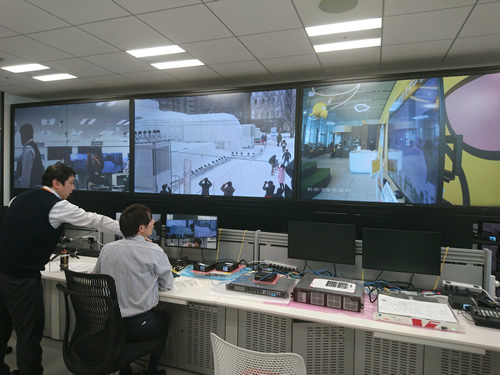
The experiment was conducted by members of participating organizations in Sapporo, Tokyo, Osaka and other locations, and the experimental software was modified at each venue, and the hardware farm was updated while the software was being revised. This have become a valuable place for sharing the technical knowledge among researchers, engineers and students through the implementation of construction and operation, as well as the development of human resources.
- National Institute of Information and Communications Technology(NICT)
- • Hokkaido Television Broadcasting Co., Ltd.
- • GAORA INCORPORATED
- • MAINICHI BROADCASTING SYSTEM, INC.
- • NHK Technologies, Inc.
- • NTT Communications Corporation
- • NTT TechnoCross Corporation
- • Nippon Telegraph and Telephone West Corporation
- • KDDI CORPORAION
- • Hokkaido Telecommunication Network Co.,Inc. (HOTnet)
- • KYOWA EXEO CORPORATION
- • OBIS, Inc. (OBIS)
- • Fatware Inc.
- • Arista Networks Japan Limited.
- • FXC Inc.
- • Cisco Systems G.K.
- • Juniper Networks, Inc.
- • Palo Alto Networks, Inc.
- • Fortinet, Inc.
- • Mellanox Technologies, Ltd.
- • NEC Corporation
- • NEC Networks & System Integration Corporation
- • Keysight Technologies
- • Tohoku Information Systems Company, Incorporated
- • FURUKAWA NETWORK SOLUTION CORP.
- • Sharp Corporation
- • JVC KENWOOD Corporation
- • PFU Limited
- • ASTRODESIGN, Inc.
- • IKEGAMI TSUSHINKI CO.,LTD.
- • FUJIFILM Corporation
- • Digital Research Corporation
- • PurelogicCO., LTD
- • FOR-A COMPANY LIMITED
- • Servants international Corporation
- • KEISOKU GIKEN Co., LTD
- • Seiko Solutions Inc,
- • STUDER JAPAN BROADCAST Ltd.
- • Miharu Communications Inc.
- • LAWO
- • Kanagawa Institute of Technology
- • Keio University
- • Nara Institute of Science and Technology
- • National Institute of Informatics
- • Information-Technology Promotion Agency, Japan
- • Nago City, Okinawa pref.
- • Union-wide Municipal Affairs of Northern Area of Okinawa Prefecture
- • Nago Development Authority
- • Knowledge Capital Association
- • VisLab OSAKA
- • Cyber Kansai Project (CKP)

ICT Testbed Research and Development Promotion Center
E-mail: tb-info[at]ml.nict.go.jp